Sep 28, 2009

(optional) contextivism !== relativism


Hypocrisy, thy name is Luke. Here's some of my own theological activism/contextivism not an hour after I wrote about disliking it. This is an optional rant post. I've tried to stay away from ranting on this blog, but in this case I just need to vent. Feel free to skip this ...

Remember I said one of the theological discussions/debates to which I'm drawn is the whole evolution/creation/Genesis thing? Well, I had been in just such a discussion over on imonk with this "Will" guy. I brought up the parallel to the Galileo affair, and he wanted to take that on.

The main meat of our exchange starts here. I'll wait while you catch up on at least that much.

Done? Good. Normally I would have commented back again, but imonk very smartly closes comments on posts older than 6 days, and I was too busy bringing my newborn daughter home from the hospital to comment in that time. That's mostly why we're getting into it here.

His last comment is the worst offense, and I really hate that it will be the last word in the dialog for anyone who stumbles onto it later. Oh well. Here's what he said:

Where does it stop Luke? What if science one day provides evidence that resurrections don’t happen. Do we need to stop with the black and white thinking that requires a literal resurrection?

Oh….wait. Science does show clearly (one heck of a lot clearer than it does show evolution) that humans that are truly dead for 3 days don’t come back to life. How can we reconcile this without becoming the closed minded church of Galileo? Maybe the resurrection was metaphor. Maybe the ancients didn’t really care about a real literal resurrection. Maybe they just cared about hope coming out of disappointment.

What? Are you arguing with me? Why are you being so closed minded about things. We all know that the dead don’t literally rise. Don’t we? The sooner Christians stop clinging to silly notions such as this the sooner we can have a genuine faith.

Or…..we could believe what scripture says and let science catch up later. Your choice my friend.


This is a classic slippery slope fallacy. It seems common among scientists, engineers (like me), and fatalists. Basically, Will is saying that if we reason that Genesis 1-3 is myth rather than literal Truth, we will inevitably be forced into sacrificing our faith in Jesus Christ to reason. It just doesn't work that way for me. Maybe it works that way for Bill G (if he's still reading this blog)? It's a similar string of logic: observe that the authorship or accuracy of text in the Bible is uncertain, and be inevitably forced to conclude that the whole Bible is myth. I just can't connect all those dots.

Back to Will's particular statement about resurrection. A similar thought came up in class as well, and I'll ask it here: is there any way science (archaeology was the science in question) could void your faith?

In that particular discussion, I had to admit yes. If I'm someday convinced that we have uncovered the tomb and remains of Jesus, that would shake and uproot my faith. I would have to more seriously consider Judaic and/or Islamic traditions. It's somewhat unpleasant thought, but I have to admit it to myself out of intellectual honesty.

So here's the point: I used to feel that way about evolution, but I don't anymore. And the key for me is context. The context of Genesis 1-3 within the Pentateuch, the Old Testament, the Jewish and Christian traditions - means evolution just doesn't amount to a faith-changing notion for me. But I understand completely where Will is at right now. When my faith was "the entire Bible is literally true as read in my own interpretation," then believing evolution would have been a faith-changing event for me. But when I rejected sola (my) scriptura, it suddenly became a non-issue.

But the key for me has always been about context. I just get really irked when people confuse contextualization with total relativism - i.e., either you ignore all context and take everything directly at face value, or else you have to concede everything you think to be True is totally relative.

Sep 10, 2009

Theological Activism

I recently called a good friend a "theological bulldozer." Let's use that conversation as a starting point, but this a great friend of mine, so don't get the idea that I'm dissing them or whatever. They read this blog; if they want to make themself known in the comments, they can.

I've talked about theology, a couple times. I'm actually very positive on theology; I'm studying for a theology degree, and hoping to get a MTS from the University of Dallas. But where I draw back is from "theological activism" - a more accurate(?) term for what I meant by "theological bulldozing." I like 'activism' terminology better because it can carry a positive context (like this), and it's more open to analogies and metaphors - my intellectual meat and drink. :)

There's areas of activism about which I'm largely apathetic. Not that I don't have my own ideas or beliefs, but there are a good many things where I indulge in some rational ignorance, and so I'm not particularly passionate about them ... at least not right now. The more I specialize my knowledge into certain things - computer programming, studying theology, brewing beer, or whatever - the less I'm willing to hold onto a strong opinion about the other things I don't know as well. And in studying theology, I find the breadth and depth of the subject so massive that I hesitate to act on my still tiny knowledge.

Though as I was writing this post, I caught myself engaging in some of my own theological activism. Specifically, I find myself drawn to discussions/debates about evolution and Genesis. I personally don't see the conflict between them as other people do, because I'm more and more interested in the mythology of Genesis in its proper context and unwrapping what Truth that implies.

I try not to nit-pick theology. So if someone is communicating a general message about how God and humans relate to one another, I won't pick out a single sentence or a single word choice on their part and blow it out of context. I love context and bigger-picture stuff. Maybe I'm into "theological contextivism" ? I wonder if that's any better?

Sep 9, 2009

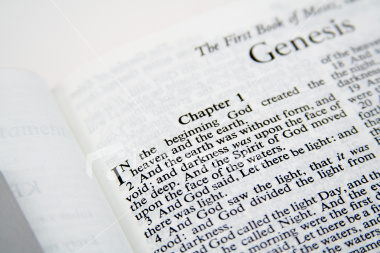
Genesis

I just got home from my 3rd class of Old Testament Literature. I'm loving the class - great textbook, great teacher, great school and setting (we have our classes at the chancery of the Tulsa Diocese).

I've always struggled with reading the Old Testament; I don't think I've ever approached it with a good context. And the first couple of classes did precisely that - focused on history, geography, languages, and cultures of the ancient near east. It's incredibly helpful to know the setting - it's the difference between watching a movie from the beginning and catching it anachronistically in 10- or 15-minute clips.

Here's some general ideas about the Old Testament, stop to think how controversial they seem to you. (I'm not going to say if I believe all of these or not, just think about them.)

  • There are many passages that copy older religious texts from Babylon, Assyria, Egypt, and other ancient near eastern cultures.

  • The Pentateuch (first 5 books) was NOT written down by Moses.

  • There are duplications and contradictions in the text.

  • Genesis is a mix of myth, legend, and saga - not literal history.


Let me talk just a bit about that last one, since that's what we talked most about tonight.


So, jumping right in, Genesis can be roughly divided into Genesis 1-11 and Genesis 12-50. Gen 1-11 is "primeval" history; the story of what happened before history - before people began recording what was happening. This seems to be a spot where lots of Christians get themselves into trouble. This isn't an historical record nor a science textbook; it wasn't written as such, and I don't believe it should be received as such.

Does that mean it isn't true? No, of course not. But it's like Tolkien says:
There are truths that are beyond us, transcendent truths, about beauty, truth [itself], honor, etc. There are truths that man knows exist, but they cannot be seen - they are immaterial, but no less real, to us. It is only through the language of myth that we can speak of these truths.

In light of this, the Truth of Genesis 1-11 may not be that a talking snake seduced a man and woman in a Utopian garden, nor that a global flood killed every creature on the earth except for those which were loaded in pairs (or 7 pairs?) onto a big boat. Because similar myths are in fact prevalent in Babylonian and Assyrian texts which pre-date Genesis by a long time. God uses the myths of Adam & Eve, Cain & Abel, Noah & the Ark, and the Tower of Babylon to speak the Truth of His preeminence and creativity, His transcendence and intimacy, His righteousness, justice, and mercy. These attributes of God are altogether unique to Genesis in contrast to the chaotic, superficial, very human-like gods of the other ancient near eastern cultures.

And that's the Truth you have to establish if you're going to tell the Patriarch sagas in Genesis 12-50. God picks Abram, seemingly at random, from among the Hebrews and calls him especially out - to depart from Ur and the rest of his people. He promises land and progeny.

Abraham answers God's call, but that's about as much as you can say for him - he offers his wife on 2 separate occassions to be had by a foreign king, he doubts God's promise and impregnates a slave girl, he exiles his own son by that slave girl. Of course, to his ultimate credit and at the pinnacle of his story, he is faithfully willing to offer his son Isaac to God.

Isaac is a pretty small character in Genesis; he seems to mainly serve as an eponymous bridge from Abraham to Jacob. Though he does manage the same trick of offering his wife to the same foreign king to whom his father did.

Jacob is a freaking mess. He tricks his brother out of his birthright, then tricks his father and his brother out of the patriarchal blessing. For his trouble, he has a personal exile back to distant family and falls in love with a young daughter, the father of whom demands, as payment, 7 years of service and then tricks Jacob into marrying the older daughter instead and demands ANOTHER 7 years of service for the younger daughter. He stays for a while, tricks his father-in-law into giving him a large number of his livestock, then decides to sneak back to his home land with his wives and their children. The younger wife steals some possessions of her father and conceals them when he catches up with them to demand them back. They make a pact and go their separate ways.

I had to ask my teacher about all this because honestly, the patriarchs are really quite shifty relative to our idea of 'Godly' people. Without naming names, I'll just mention that the 'heroes' of the sagas of Israel, at various times engage in or attempt: fratricide, sex outside of marriage, polygamy, incest, deception and fraud ... the list goes on.

Eventually Jacob is renamed Israel by God, and his, really all the Patriarchs', story is redeemed by his son Joseph - really the only character in all of Genesis whom I can personally admire and would seek to imitate. He's the one with the fancy coat and the interpretation of dreams; sold into slavery, taken to Egypt, rises to become Pharoah's right-hand-man and eventually uses his position to enact a grandiose scheme of reconciliation with his brothers and father, thru which he coincidentally brings all the 12 brothers - whose names just happen to be the names of the 12 tribes of Israel - down from Palestine into Egypt under the Pharoah.

Curtain. End of Act 1. Act 2 is Exodus.

Seriously, if the primeval history of Genesis (1-11) speaks the transcendent Truth of God's divine nature, the patriarchal history of Genesis (12-50) speaks, very loudly, the very imminent truth of a very flawed human nature living out under that divinity.

Taken in context, it seems obvious that Genesis is meant largely as a preamble to Exodus. So, here's my question that my instructor intentionally left open to me:

How much, and which parts, of Genesis is myth, legend, saga, and/or historical fact?

Aug 26, 2009

Fr. James Martin

I really like this Fr. James Martin. Maybe as much as I like Fr. Barron. I first saw him in this:


And now I hear him in this:


He's also the "Colber Report Chaplain" and has made a number of funny appearances on the show. (Incidentally, Stephen Colbert is a practicing Catholic and teaches Sunday School.)


I like humor - the coming together of opposites; the meeting of incongruous things. In Spring of 2008 I was making frequent flights (once or twice a month) to California for my work. In all my travels, I packed 2 books to read and re-read: The Bible, and C.S. Lewis's Mere Christianity. I read thru the entire New Testament without any commentaries or study guides at all. I found myself laughing out loud at some of Jesus's comments. I can't recall the verse right now, but it's the one where he says, "Who among you, if their child asks for food, gives him scorpions and bricks?" If you read the whole passage together at once, the statement has a bold levity with which he contrasts the religious rigamarole of the times with a simple lesson in love and relationship. It's classic, and classy, humor.

We often think of Jesus's power, his divinity, his love and compassion. We revere him as a great prophet and a great philosopher. We don't as often stop to recognize that Jesus was incredibly smart. Not just knowledge (all-knowing) smart, but clever - i.e., he knew how and when to apply that knowledge in situations. He was not just omniscient, but omni-witty.

He revealed God's Personality as much as God's Truth, and we find that God has a great sense of humor.

Aug 24, 2009

Souvenirs


I have quite a few souvenirs from various places, trips, and experiences. Some of the ones in the picture are: a walking kiwi toy from my wife and I's honeymoon in New Zealand, a samovar from my study-abroad trip to Russia, a little jewelry box/container from our trip to Brazil where I spoke at a tech conference, a funny Irish doll from a trip we made with my brother and his wife to Ireland+Scotland+England, and a pointless Eiffel Tower-shaped container of some kind of bath salts I got for Tiffany when I visited my sister in Paris.

Most of them aren't functional - we've obviously never used those bath salts, nor is there anything in any of the containers, and the walking Kiwi got kinda busted on the flight back. We mainly keep them as mementos - objects that remind us of travels and stories that have affected us; they're personal artifacts. Looking at them, I recall those experiences and how they've shaped our lives.

In a similar manner, I appreciate all the symbols and signs we use in the Catholic Tradition to recall to our minds the way God affects us in our faith. From personal signs like the Sign of the Cross to the myriad of symbols we find in a Cathedral and other Christian artifacts.

Sometimes, a personal artifact is so significant and profound that it stands the test of time, affecting the Christian community for generations. These are relics. The Church has a robust appreciation, and even a systematic doctrine, for relics. Read up if you like.

I'll just write about my own small experience.

Every Catholic church contains a relic within its altar. It is also (always?) a relic of the church's patron saint. My parish is the Church of Saint Benedict; we have a small bone fragment of Saint Benedict contained in the altar at the front of the sanctuary. And in many (all?) churches, there is also a relic contained in the altar of the chapel.

This is one of the reasons Catholics bow towards the altar. I didn't even learn this until I had been in RCIA for a few weeks - and had been doing it that whole time! Though the layout of some churches might make it appear we're bowing to the priest, it isn't necessarily the case. Ideally, we're recalling to mind the patron saint(s) of the church and venerating them with the honor that is due to a Christian servant who stands in full communion with God. Of course, as with any ritual, there's a chance the act loses its meaning; just as there's a chance I frequently see my own souvenirs without pausing to contemplate them. But that's no reason to throw away my souvenirs, and no reason to belittle the value of relics.

One last note I should make before I sign off for the day.

In addition to bowing towards the altar, Catholics genuflect and make the Sign of the Cross to the tabernacle. It's a different motion with a different intention and it stems from understanding the different honor that is due to a Saint than is due to God Himself. When you are in a Catholic church, you will see a candle next to His tabernacle. If the candle is lit, it contains the Blessed Sacrament - Christ Himself. In this case, it's appropriate to forgo a bow to offer the deeper honor due to Christ. The saints themselves intend this - their lives serve to introduce, reveal, guide towards, and defer to, Christ. This is how they're blessed with sainthood, and how they're personal artifacts are meant to inspire and affect us.

Their relics are entwined with the meaning of their lives - mirrors reflecting the light, life, and love of God. So it seems kinda cool to keep them around.

Aug 20, 2009

On Control


"Religion is set up not to help people, but to control people."
I read this recently, and it's a pretty serious, and in many ways very accurate, challenge to all religious systems. Of course, I'm going to offer a dissenting opinion.

Firstly, invoking any term as broad as 'Religion' forces us to define the term before any constructive dialog can take place. Personally, I define religion the way I define many things - with metaphor. Specifically, the C.S. Lewis metaphor in which religion is analogous to a map.

Most interestingly to me - maps should be "set up" with no purpose. They are simply an accessible, navigable depiction of the real world. The closest thing I can think of to a map with a purpose would be a "treasure map"; it's probably accurate to say this describes some religions, or certain corruptions of some religions.

But to speak of a map being "set up" with a purpose doesn't make much sense, and so it is with religion. By and large, with maybe some notable exceptions, religions are developed not by a single intention, but over time by the accumulated wisdom of many people navigating the real world - both natural and supernatural (topic for further discussion elsewhere).

I think the crux of the misunderstanding of religion as a tool for control lies in a person's trust in the 'cartographers of religion' and their purposes. Let me explain with a few stories.

When my wife and I traveled to Brazil, we relied on taxi's to get around Sao Paulo. My iPhone data plan doesn't work overseas, so I was without my trusty Google Maps and GPS. :( When we arrived at the airport (after 16 hours of bus travel, mind you), we grabbed the closest taxi driver - trusting him to get us to our hotel. It was soon painfully obvious the driver didn't really know the geography or where he was going, and he made 3 stops to ask for directions at our expense. But we had no car, no map, no knowledge of the language; he had our luggage and our persons in his car with no other taxi's around, so what could we do? He was intentionally controlling us for his own benefit. Then to top it all off he over-charged (scammed) us for something we were sure we didn't owe. Our trust was mis-placed, and I would never trust him to drive me again, so I threw away his card. He didn't have a map, nor did he have his own knowledge of the area, and his intentions were bad! Sound like some peoples' encounters with religion?

Later on the same day, we were running low on Reals (Brazilian currency) and needed to find a currency exchange for travelers' checks. We talked to the hotel receptionists (who spoke English very well, despite how many times they apologized for their "poor English"), who arranged for another taxi to take us to a mall where there was a currency exchange. So we got in the taxi and the driver took us to the mall. But, once there, the driver (we don't speak any Portuguese and no-one else spoke English outside the hotel) found out the exchange place didn't exchange travelers' checks and we would need to go to a different mall. So again we trusted the driver and we set out to the next mall, but again no luck. At this point our taxi fare is well above the amount of Brazilian money we have, and we've been wandering around Sao Paulo aimlessly for over an hour and a half. We finally have the driver take us back to the hotel, where the receptionists arrange to lower the fare and put it on our hotel room so we don't need cash. On this little quest we had trusted the receptionists and the cab driver, and their intentions were good, but circumstance and a communication barrier meant we still didn't get where we wanted to go. Hmm ...

So, then they explain that the exchange market is down the road just over a mile - within walking distance from the hotel. They give us a map of the area, draw the path, and give us a landmark to look for - it's next to a Walmart - which means our American blood will be irresistibly drawn towards it. ;) We set out on foot, and I make the observation to Tiffany, "I like not having to rely on someone else to travel. I like being in control of ourselves." We easily find the mall with the exchange counter, we get the cash, are able to shop around and eat before we leave, and we even found a Catholic book store on the way back to the hotel!

Now what does this have to do with religion and control?

I think many or most people confuse religion - the map - with the individuals espousing a religion - the 'cartographers'. Some people, like our first cab driver, are out to use what they can to control others for their benefit. Some others, like our second cab driver, are well-meaning, but just fumble things up. Some few, like our receptionists, have just enough mix of good intentions and knowledge that they can use an existing map and add their own contribution to it to help us in our journey.

So, to say that religion is set up to control people is like saying the map of Osasco was set up to control my wife and I - to prevent us from getting to our destination. It wasn't. In fact, it was only in trusting the map, our guides, and ourselves that we were free to travel around town as we wanted to. So it is with religion(s). The good ones are maps to life; built out of the accumulated knowledge of trustworthy guides for us to navigate the journey of life. When you approach and understand them correctly, they are far from controlling - they offer us freedom to explore without getting lost.

Aug 17, 2009

Christ in the Common


Ah, now here is the kind of Emerging theology that floors me in a way I've never experienced from other Protestant circles. Admittedly, any Christian - Protestant or Catholic - can fall into the trap of dividing the Sacred from the Common.


http://www.marshill.org/teaching/ ("The Christ in the Common" link)

At our parish, we begin Mass with a moment of quiet reflection, "to remind ourselves we are in the Holy Presence of God." I've always thought of it this way - not that God is confined to church, but that we gather together as a church especially to remind ourselves of, and re-awaken ourselves to, His presence. So then we can more easily recognize Him in our everyday common lives.